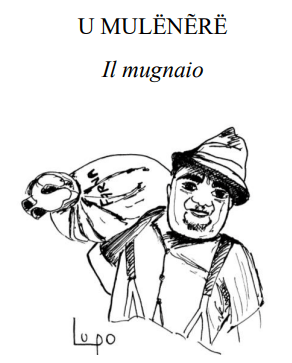
Il lavoro del mugnaio girava intorno all’acqua che faceva muovere la ruota e le pietre che macinavano il grano. Quindi, se c’era acqua lui poteva lavorare e permettersi il vino; se non c’era acqua sufficiente per poter lavorare… era costretto a bere acqua! La storia di Agromonte è fortemente intrecciata con quelle dei mulini, come dimostrano alcune testimonianze; una zona del paese è infatti nota come “Località Mulini”.
The miller’s work revolved around the water that moved the wheel and the stones that ground the grain. So if there was water he could work and afford wine; if there was not enough water to work with…he was forced to drink water! The history of Agromonte is strongly intertwined with the history of mills, as evidenced by a number of accounts; in fact, an area of the village is known as the “Mill Locality.”
El trabajo del molinero giraba en torno al agua que movía la rueda y las piedras que molían el grano. Así pues, si había agua podía trabajar y permitirse vino; si no había suficiente agua para trabajar… ¡se veía obligado a beber agua! La historia de Agromonte está fuertemente entrelazada con la de los molinos, como demuestran algunos testimonios; de hecho, una zona del pueblo se conoce como “Località Mulini”.
Le travail du meunier s’articulait autour de l’eau qui actionnait la roue et des pierres qui broyaient le grain. Ainsi, s’il y avait de l’eau, il pouvait travailler et s’offrir du vin ; s’il n’y avait pas assez d’eau pour travailler… il était obligé de boire de l’eau !
L’histoire d’Agromonte est fortement liée à celle des moulins, comme le montrent certains témoignages ; une zone du village est en effet connue sous le nom de “Località Mulini”.



 Il paese degli indovinelli