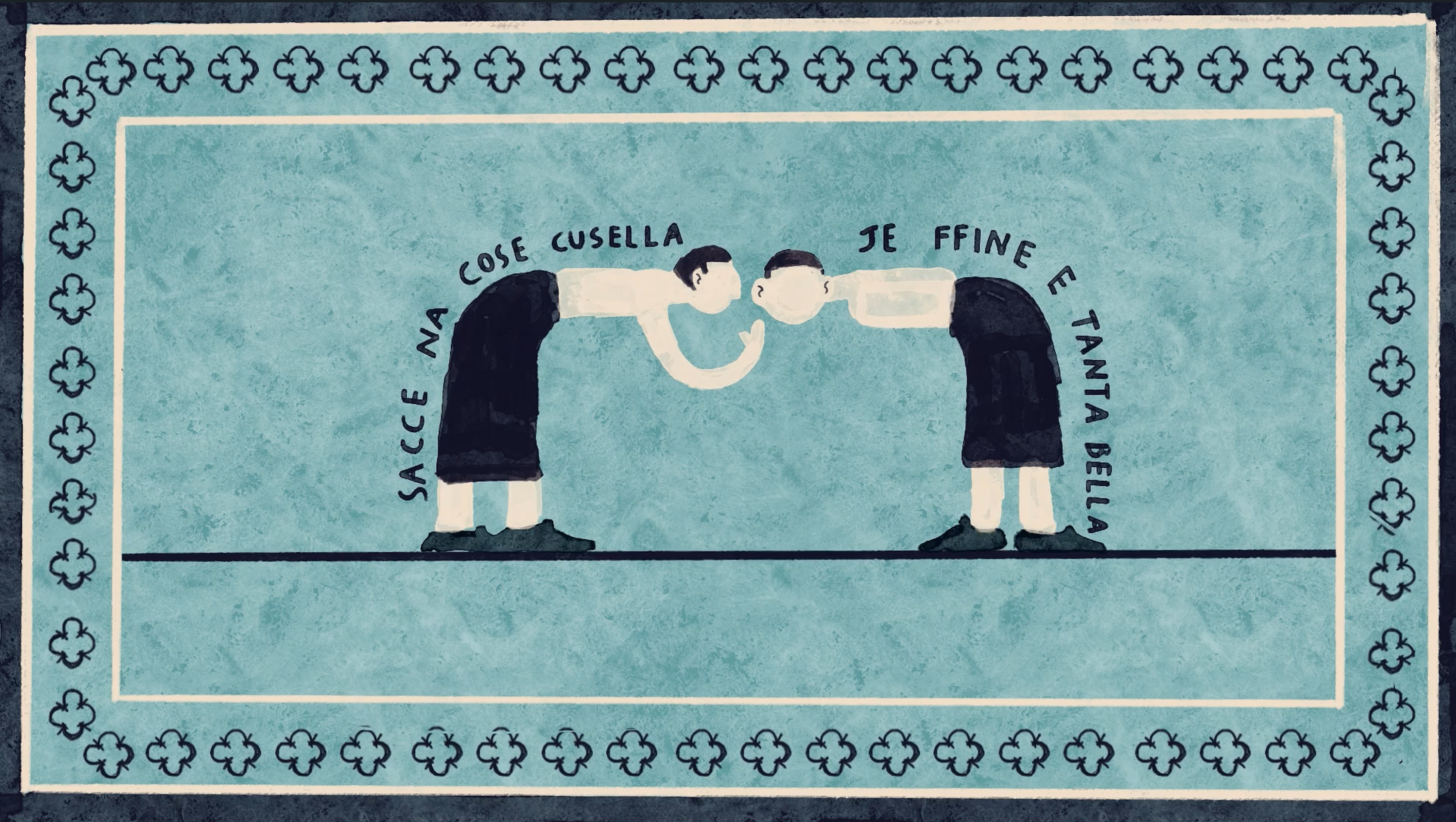
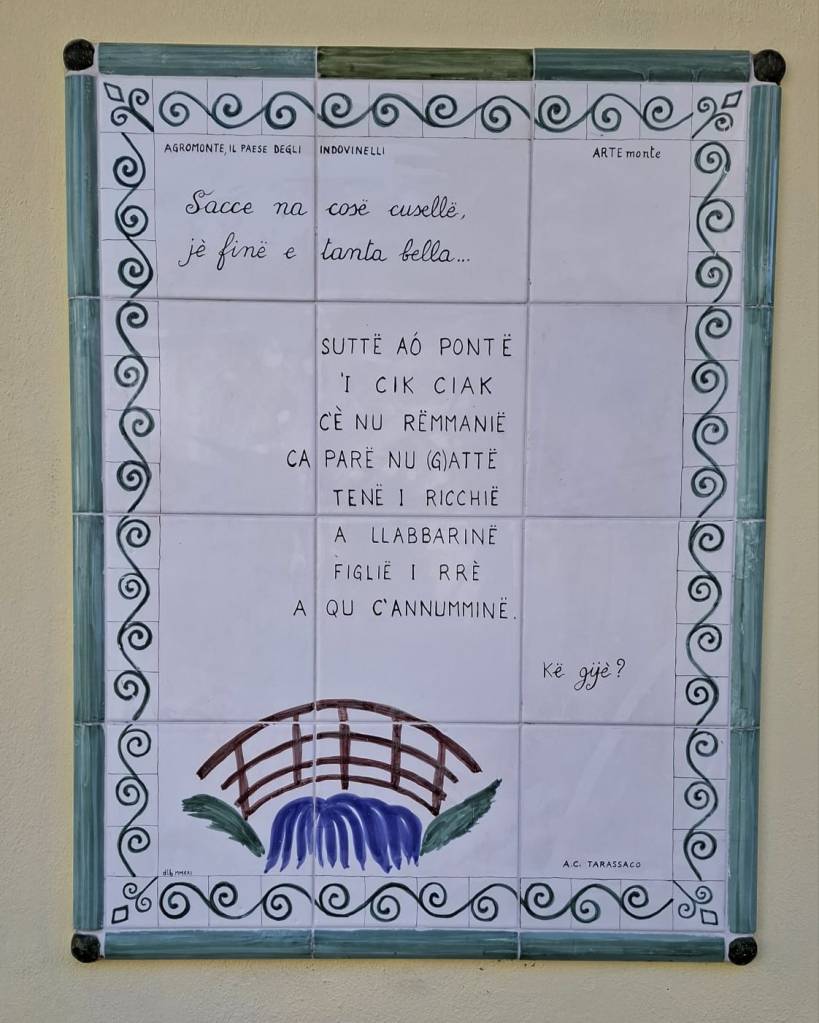
Saccë na còsa cusèlla,
iè ffinë e tanda bbèlla…SUTTË Ó PÒNDË I CIC CIAC
C’È NU RËMMANIË
CA PARË NU (G)ATTË.
TÈNË I RICCHIË A LLABBARINË,
FIGLIË I RRÈ
A CU CI_ANNUMMINËChë gghiè?

“Saccë na còsë cusèlla,
iè ffinë e tanda bbèlla…”, so una cosa cusella, che è fine e molto bella: è l’introduzione di ogni indovinello agromontese, indovinelli che vanno oltre il significato apparente delle parole.
“Sotto il ponte di Cic Ciac c’è un animale che sembra un gatto. Ha le orecchie simili a quelle di una lepre, figlio del re se nominato.”

Beneath the bridge of CIC CIAC (onomatopoeic sound identifying the sound of water when trodden on) is an animal (RËMMANIË) that appears to be a cat; with ears A LLABBARINË (hare’s ears, referring to certain wrinkles in the skin of frogs that look like ears), the son of the King if named.

Bajo el puente de CIC CIAC (sonido onomatopéyico que identifica el sonido del agua al ser pisada) hay un animal (RËMMANIË) que parece ser un gato; con orejas A LLABBARINË (orejas de liebre, en referencia a ciertas arrugas en la piel de las ranas que parecen orejas), se nombra al hijo del Rey.

Sous le pont de CIC CIAC (son onomatopéique identifiant le bruit de l’eau quand on la piétine) se trouve un animal (RËMMANIË) qui semble être un chat ; avec des oreilles A LLABBARINË (oreilles de lièvre, faisant référence à certaines rides de la peau des grenouilles qui ressemblent à des oreilles), le fils du roi si nommé
 Il paese degli indovinelli